Enterprise AI and its real-world applications
What is Enterprise AI?
Enterprise artificial intelligence (AI) refers to the integration of advanced AI technologies and methodologies within large organizations to enhance business functions. It encompasses everything from routine tasks such as data collection and analysis to more complex operations such as automation, customer service, and risk management.
The core characteristic of Enterprise AI is the utilization of AI software tools based on cutting-edge methodologies, including machine learning (ML), natural language processing (NLP), and computer vision. These technologies enable organizations to achieve process automation across various use cases, streamline complex business functions, automate repetitive tasks, and fully leverage the data they accumulate.
By using AI to analyze data, companies can extract valuable insights regarding key performance indicators (KPIs) and optimize their business strategies. However, the journey toward digital transformation through Enterprise AI also faces challenges. Implementing these systems requires substantial investments in technological infrastructure and professional talent.
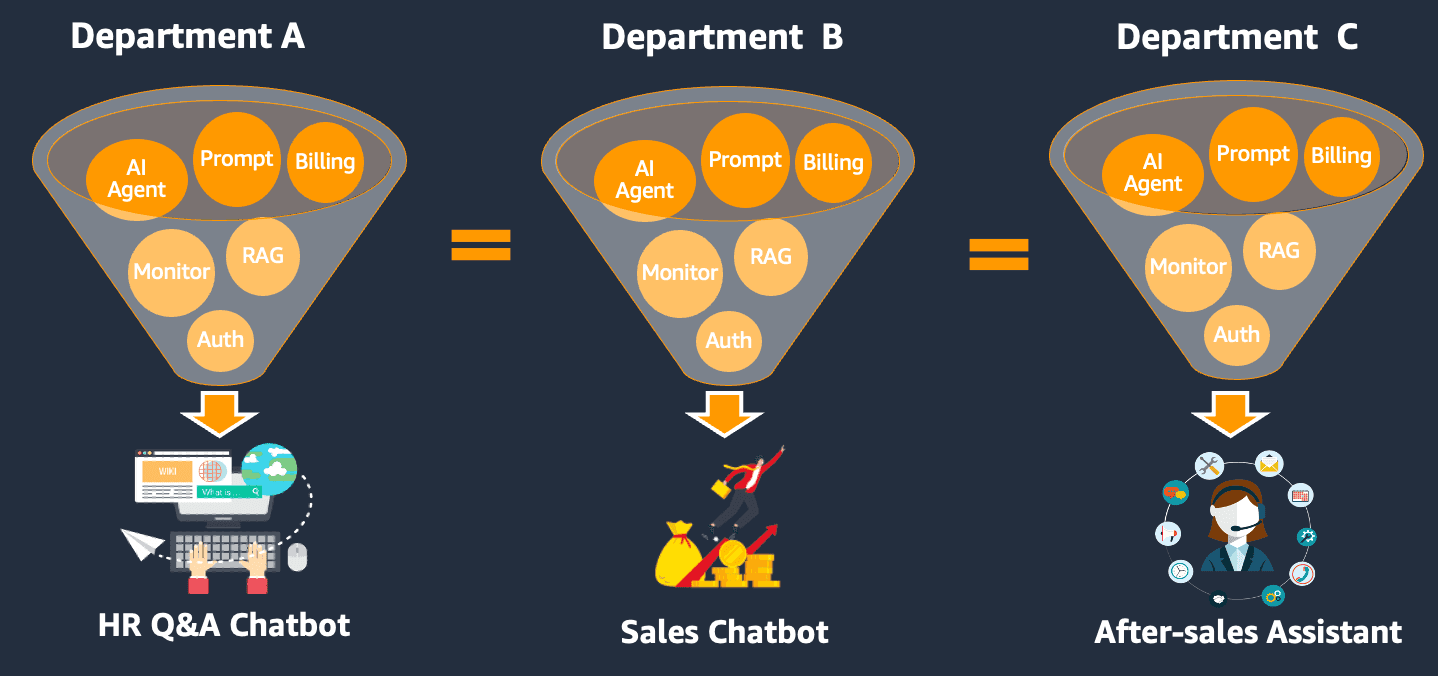
Enterprise AI Case Studies
The application of Enterprise AI covers a wide range of business operations, such as supply chain management, finance, marketing, customer service, human resources, and cybersecurity. In every field, Enterprise AI facilitates more informed, data-driven decision-making, improves operational efficiency, optimizes workflows, and enhances the customer experience. Consequently, organizations can significantly improve business processes, gaining greater resilience and profitability.
A significant aspect of Enterprise AI is its ability to handle high-value, complex challenges at scale, such as automating simple workloads, enhancing product features, assisting customer decision-making, providing personalized user experiences, and solving intricate business problems. This shift toward AI-driven operations has permanently changed how companies manage internal processes and interact with customers.
Enterprise AI is the driving force behind many of today's innovative products and services that benefit the world, with the potential to increase productivity for all institutions, from startups to global organizations.
Enterprise AI Use Cases
- Supply Chain Optimization: AI tools can forecast product demand, optimize inventory levels, and identify potential disruptions within the supply chain ecosystem. This ensures smoother operations, reduces costs, and improves responsiveness to market changes.
- Financial Fraud Detection: In the financial sector, AI algorithms are used to detect fraudulent activity. These systems analyze transaction patterns and mark abnormal activities, significantly reducing financial fraud risks. This is particularly vital in banking and online transactions where security and trust are paramount.
- Personalized Marketing: AI tools analyze customer data to create personalized marketing campaigns. By understanding customer preferences and behaviors, companies can tailor advertising and product recommendations, thereby increasing engagement and sales.
- Enhanced Customer Service: AI-driven chatbots and virtual assistants provide 24/7 customer service, efficiently handling inquiries and resolving issues. These AI systems learn from interactions, continuously improving their ability to assist customers.
- Human Resource Management: In the HR field, AI-driven products assist in resume screening and candidate matching, helping to identify the most suitable applicants for open positions. They can also analyze employee data to provide decision-making recommendations for training, development, and retention strategies.
- Cybersecurity Threat Detection: AI is crucial in identifying and mitigating cybersecurity threats. By analyzing network traffic and identifying abnormal patterns, AI systems can detect potential security breaches before they cause significant harm.
- Healthcare Diagnostics and Research: Healthcare technology assists in diagnosing diseases, analyzing medical images, and predicting patient outcomes. This application not only accelerates the diagnostic process but also improves the accuracy of the findings.
What is Enterprise Scale?
Within the context of Enterprise AI, "enterprise scale" refers to the ability of AI systems and technologies to operate effectively within the complex environment of a large organization. These systems must meet the following key criteria:
- Scalability (Scalable): AI systems must be able to handle increasing workloads or expand to accommodate business growth needs without requiring significant redesign.
- Reliability (Reliable): Trust in AI for an enterprise means consistency in performance and minimal downtime.
- Security (Secure): Given the sensitivity of business data, robust security measures must be in place to protect data integrity and confidentiality.
- Integration: AI systems should seamlessly connect with other business systems, ensuring smooth data flow within the organization's IT infrastructure.
- Governance: Involves establishing policies for managing AI systems, including compliance with legal and ethical standards, data governance, and ensuring accountability in AI decision-making.
- Value Delivery: Enterprise AI should contribute positively to organizational goals, providing tangible benefits.
- Ease of Use: User-friendliness is vital; tools should be easy for a wide range of users (not just data scientists) to understand and use.
- Flexibility: Refers to the ability of the AI system to adapt to ever-changing business needs or objectives.
- Sustainability: Involves designing efficient systems that are maintainable over the long term, including consideration of environmental impacts.
Implementing Enterprise AI
Successful implementation of Enterprise AI requires a technology stack capable of processing enormous amounts of high-quality data almost instantaneously in a secure and resilient environment. This requires massive computing power, which is why many organizations choose to partner with tech companies that provide modern cloud environments and supercomputing platforms.
- Define Organizational Goals: Clearly outline what the organization hopes to achieve through AI (efficiency, experience, innovation, or revenue).
- Assess Data Preparedness and Develop Data Strategy: Evaluate data availability, quality, and accessibility. A solid data strategy is critical.
- Build Cross-Functional Teams: Integrate data scientists, AI experts, domain specialists, and IT professionals.
- Formulate Development Plans: Select technical tools, define project scopes, set timelines, and allocate resources.
- Design and Launch Pilot Programs: Test AI solutions in a controlled environment to verify feasibility before full-scale implementation.
- Integrate Technology: Integrate AI technology into existing systems and workflows, ensuring compatibility and minimizing operational disruption.
- Maintain Technology Health: Continuously monitor performance, regularly update, and make necessary adjustments post-deployment.
Advantages and Risks of Enterprise AI
- Advantages: Fundamentally transform business operations by automating routine tasks and optimizing business processes. It can streamline operations, reduce costs, enhance cybersecurity, provide deeper data analysis, and improve the customer experience through 24/7 support.
- Risks: Ethics and responsibility, data privacy and security, and the impact on employment all require governance. If improperly designed and monitored, AI systems may exhibit bias or violate ethical standards; handling vast amounts of sensitive data requires prevention of leakage risks; enterprises must invest in retraining and reskilling for employees.
The Future of Enterprise AI
The development of Generative AI technology has released the inherent advanced capabilities of Enterprise AI. It is no longer limited to traditional predictive models; instead, it leverages large language models (LLMs) to create new content, generate code, and provide complex creative solutions. Key areas for future advancement include:
- Greater Degrees of Automation: Handling extremely complex tasks with minimal human intervention.
- Enhanced Prediction: Becoming more adept at predicting market trends, customer behaviors, and business risks.
- Advanced Image and Speech Recognition: Improving precision in fields such as healthcare and security.
- Large-Scale Personalization: Providing more nuanced and individualized customer experiences.
- AI Solutions for Niche Domains: Tailored tools for specific industries like agriculture, education, and manufacturing.
- Full Integration: AI will seamlessly merge with the Internet of Things (IoT), Big Data, blockchain, and edge computing to provide real-time analysis, enhanced security, and faster localized processing.
Choosing Professional Partners for AI Transformation
While it is feasible to "DIY" using internal talent and open-source applications, this path is fraught with complexity and challenges. Implementing Enterprise AI requires a deep understanding of AI methodologies, deep learning, data science, cloud computing frameworks, and specific business domains.
Enterprise AI is essentially a complex and brittle system. Its effectiveness depends on both initial implementation and continuous monitoring and adaptation. AI models can degrade over time (i.e., "model drift"), losing their effectiveness. Without vigilant oversight and regular updates, systems may become obsolete or misaligned with business objectives. An experienced partner can ensure that new and old systems operate harmoniously, extracting maximum value from AI investments.